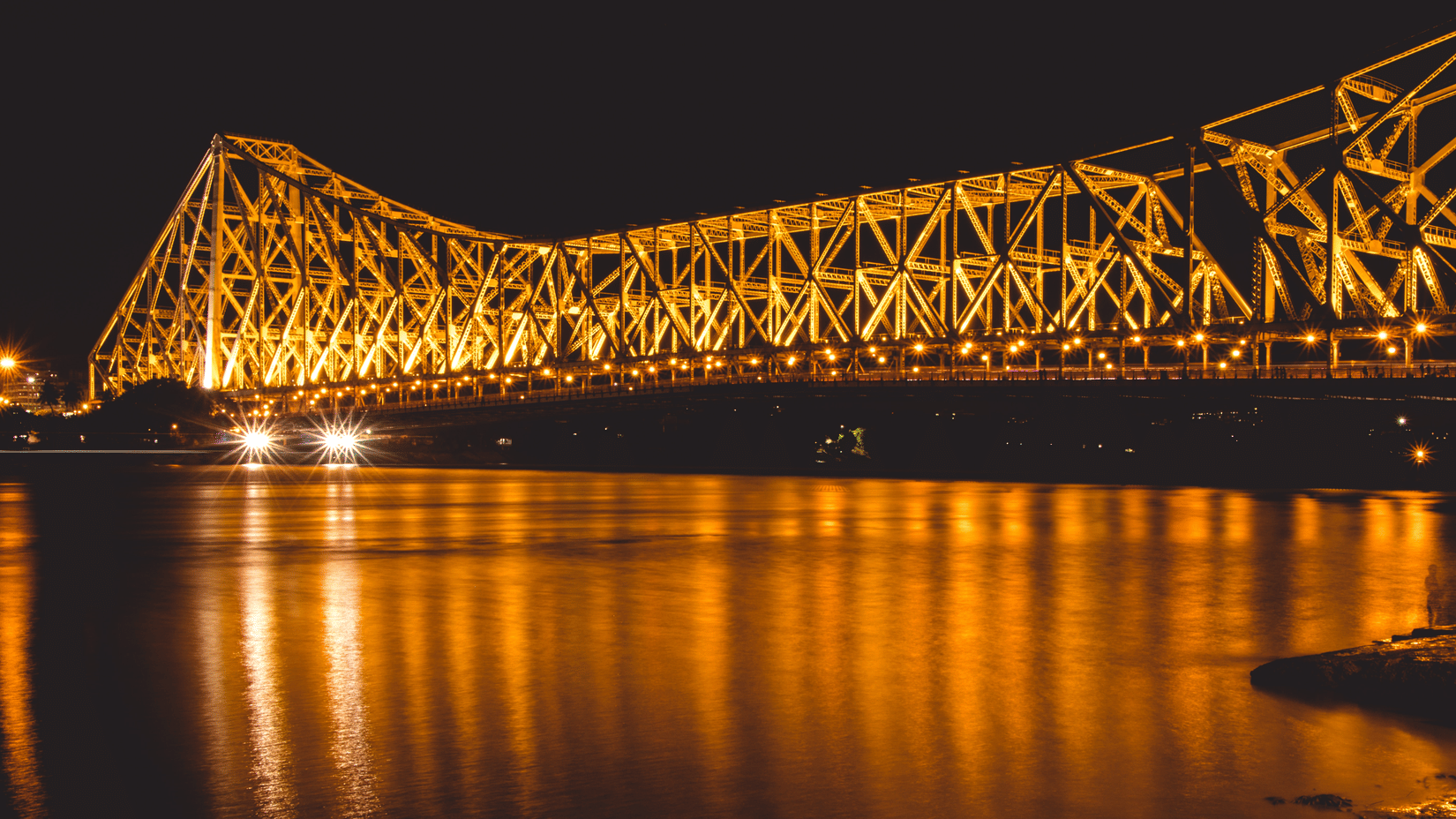
Built to Last: The History of Howrah Bridge
The history of Howrah Bridge goes back to the mid-20th century, when Kolkata was still the commercial capital of British India and the river crossings at the Hooghly were overwhelmed by traffic. A pontoon bridge had served the city since the late 19th century, but by the 1930s, the city's growing population and industrial activity had made a permanent structure a necessity.
Construction on the present bridge began in 1937 and was completed in 1942, with the bridge opening to traffic on 3rd February 1943. Designed by Rendel, Palmer, and Tritton, it was built by Braithwaite, Burn, and Jessop Construction Company. It established itself as a landmark achievement in engineering for its time. In 1965, the bridge was renamed Rabindra Setu in honour of the Nobel laureate Rabindranath Tagore, though Kolkatans have continued to call it by its original name.
A Cantilever Marvel: The Architecture of Howrah Bridge
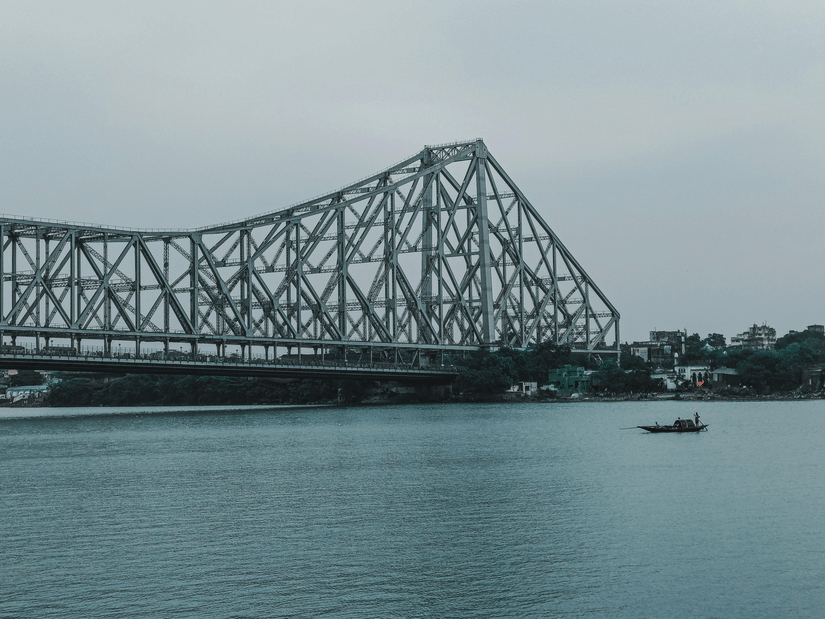
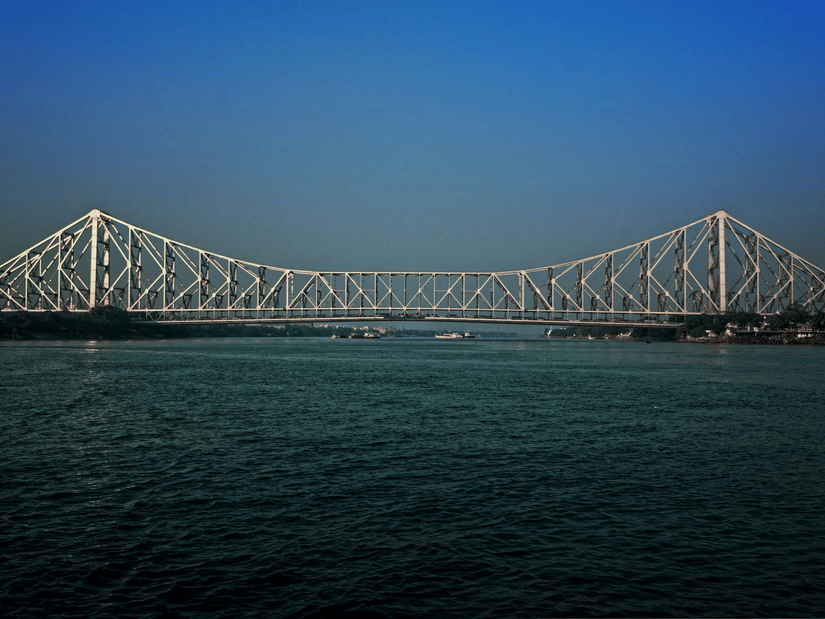
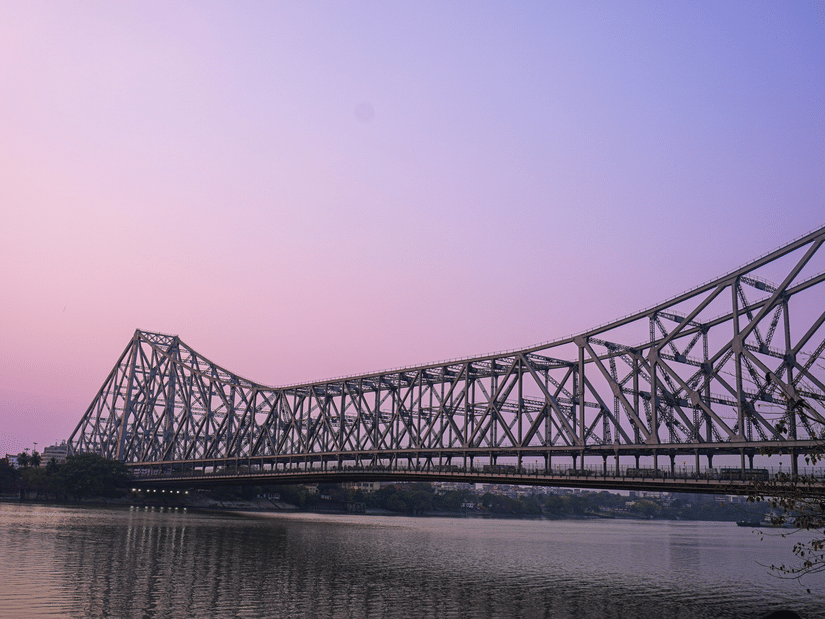
Howrah Bridge is a balanced cantilever bridge, a structural form in which 2 horizontal arms extend outwards from each tower and support a central suspended span between them. This design was chosen because constructing supports in the river bed of the Hooghly, with its heavy monsoon flows and silt deposits, was not feasible. The result is a bridge that stands entirely on 2 anchor arms, 2 cantilever arms, and a central suspended span, with no piers in the river itself.
The bridge was assembled using high-tensile alloy steel and held together by approximately 26,500 tonnes of steel. What makes it particularly remarkable is that the entire structure was riveted, with no nuts or bolts used in the assembly. At the time of its construction, it was the third-longest cantilever bridge in the world.
Key Facts
Getting into the specifics reveals just how substantial this structure is. The Howrah Bridge length is approximately 468 ft. in total between the 2 towers. The bridge is 21.6 m wide and accommodates 6 lanes of traffic, with separate pedestrian walkways on either side.
At a Glance
- Official Name: Rabindra Setu (commonly known as Howrah Bridge)
- Year Opened: 1943
- Total Length: Approximately 468 ft.
- Width: 21.6 m
- Type: Balanced cantilever bridge
- Daily Traffic: Approximately 100,000 vehicles and 150,000 pedestrians
- Steel Used: Approximately 26,000 tonnes
- Entry Fee: Free
More than Steel: The Cultural Importance of Howrah
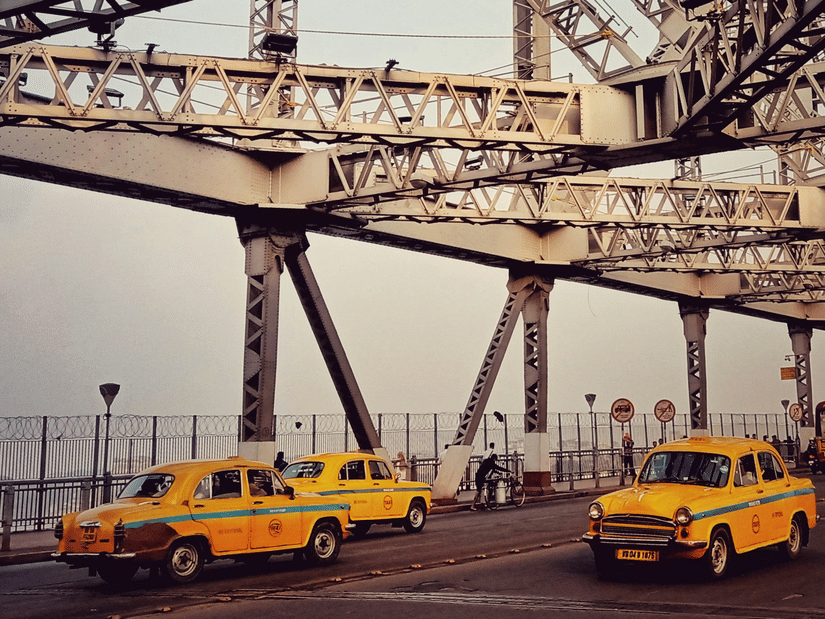
Ask anyone in Kolkata what defines the city, and this bridge will come up almost immediately. Howrah Bridge is not simply a crossing. It is a daily ritual for millions, a backdrop for Durga Puja processions, a canvas for Bengali cinema, and a symbol of the city's endurance. The bridge appeared in films as early as the 1940s and has since become shorthand in visual media for Kolkata itself.
The flower sellers who line the Mullick Ghat below it, the early morning fishermen on the Hooghly, and the evening crowds watching the lights reflect off the river: all of this is inseparable from the bridge. For visitors, understanding this cultural dimension turns a sightseeing stop into something genuinely affecting.
Sunrise, roughly between 5:00 AM and 6:30 AM, is the most atmospheric time to visit. The light over the Hooghly casts the steel lattice in soft gold, and the river traffic begins to stir, perfect for photography. The footpath is relatively quieter at this time, and the air carries the scent of marigolds from the flower market below.
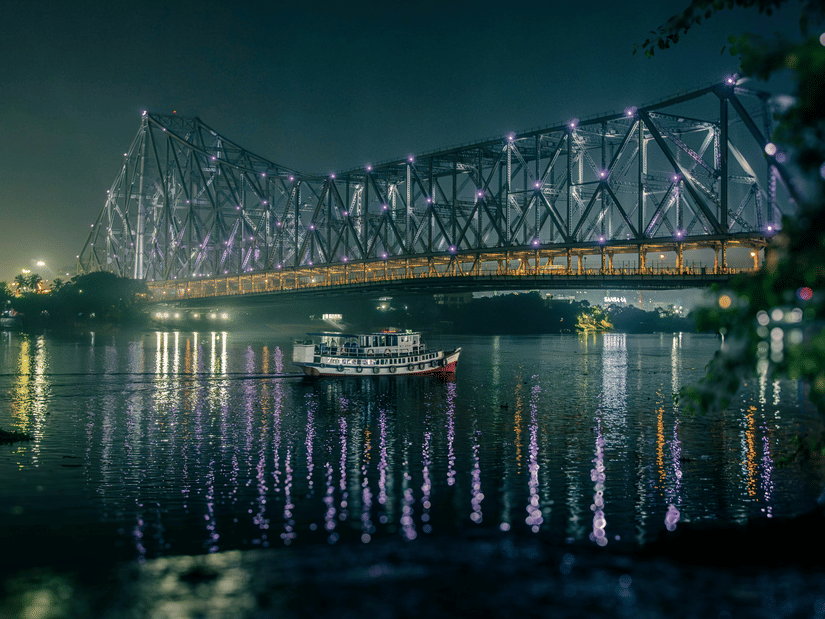
Sunset, typically from around 5:30 PM to 7:00 PM, offers a different kind of spectacle. The bridge lights up gradually as dusk settles, and the evening commuter traffic creates a sense of the city at full energy. A boat ride on the Hooghly at this hour gives you the full view of the illuminated structure from the water.
Avoid midday during summer months (March to May), when temperatures can exceed 38°C and the bridge walkways offer minimal shade. The October to February period is the most comfortable season overall, with daytime temperatures between 15°C and 25°C.
- Mullick Ghat Flower Market (within walking distance): One of Asia’s largest wholesale flower markets, operating through the night into early morning; best experienced alongside a sunrise visit for its colour and energy.
- Babu Ghat (~4 km): An accessible stretch along the Hooghly River, offering a calmer contrast to the bridge; boat rides from here last around 30 to 45 minutes.
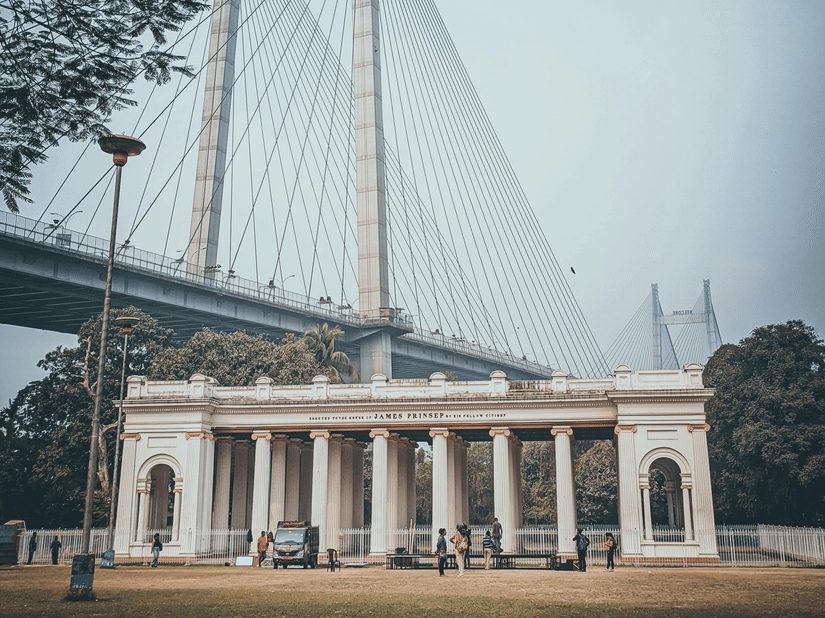
- Prinsep Ghat (~6 km): A scenic riverfront known for its open views and relaxed pace, also offering boat rides with clear perspectives of the bridge.
- Belur Math (~6 km): Headquarters of the Ramakrishna Mission, founded by Swami Vivekananda, located about 6 km north along the river.
- Dakshineswar Kali Temple (~11 km): A prominent temple a further 5 km from Belur Math, completing a scenic riverside stretch ideal for a half-day itinerary.
What to Eat near Howrah Bridge
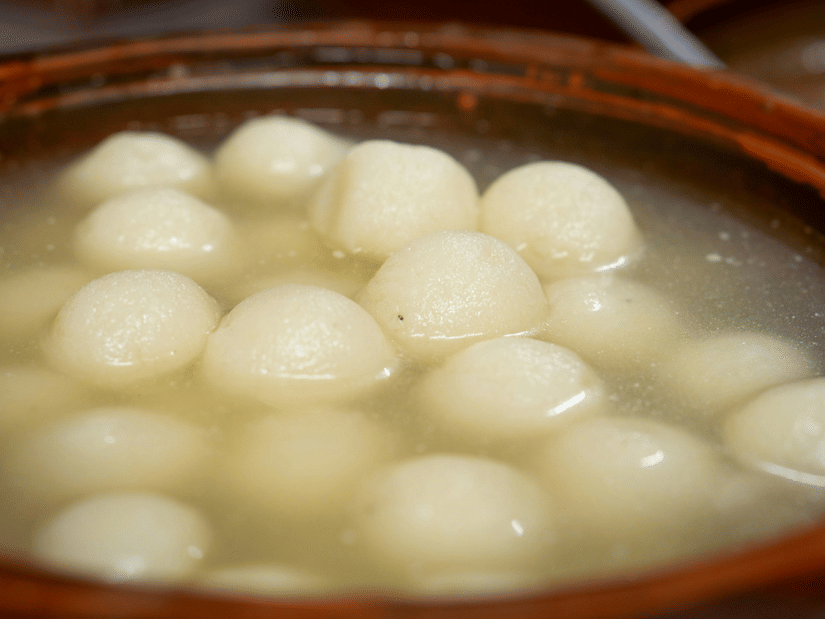
Kolkata's food culture is at its most democratic in the streets around the bridge. The stalls near Howrah Station serve kati rolls from early morning. These flaky parathas wrapped around egg and mutton filling are the city's answer to fast food and are rarely replicated as well anywhere else. The junction of Strand Road and B B D Bagh, a short walk from the bridge, has a concentration of traditional Bengali sweet shops offering mishti doi, sandesh, and rasogolla.
For those who want a sit-down meal, the Park Street area, roughly 4 km from the bridge, has Kolkata's highest concentration of established restaurants serving both Bengali and continental cuisine. The city's famous phuchka stalls operate from late afternoon until late evening throughout the area and are a non-negotiable stop for first-time visitors.
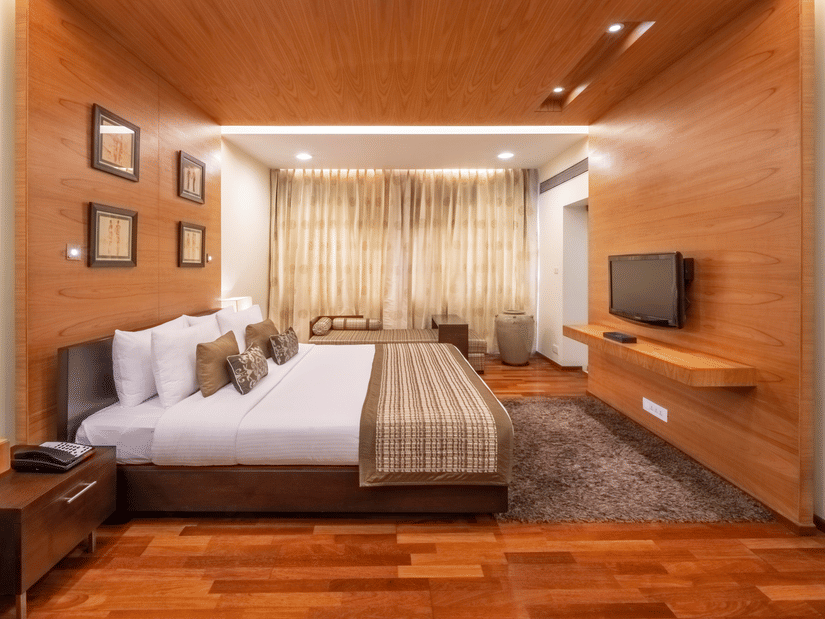
Our 101 rooms and suites, from Executive Rooms to the Presidential Suite, are designed with contemporary interiors and equipped with modern amenities to ensure a comfortable base after a full day of sightseeing. The hotel is approximately 30 minutes from Howrah Railway Station, making arrivals and departures straightforward.
Dining at the hotel covers a range of occasions and cuisines. Aromas, our all-day coffee shop, serves an extensive menu of Indian and continental dishes along with a buffet for breakfast and dinner. Vietnom brings Vietnamese and Pan-Asian flavours to the table in a warm, wood-accented setting. For those who want to sample Kolkata's culinary culture without leaving the hotel, our dining options cover everything from a quick meal to a more considered evening out.